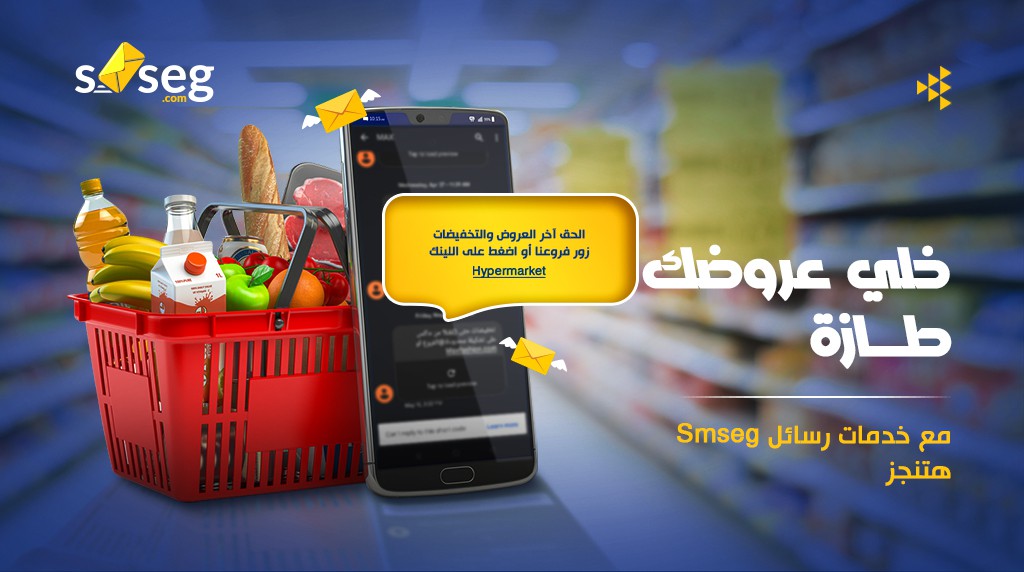
Hypermarkets are one of the most potential businesses, as they heavily depend on customer relationships and satisfaction. SMS marketing is sure to help your business improve sales and customer support.
What is SMS marketing?
SMS marketing is a way to send campaigns or promotional messages to your customers using text messages with a limit of 160 characters.
Improve Customer Loyalty
Customer loyalty is the success mantra of every business. Supermarkets usually thrive on loyal customers, most of whom hold premium cards or memberships. With SMS marketing, business operators will be able to alert customers about new products and special offers.
Improve Communication
Timely and effective communication is the key to building customer relationships. SMS marketing can be a great tool for communicating with customers.
Quick and Effective
A powerful message can be sent in a few words. The service is very quick and reaches all contacts within seconds of sending the message.
Cost-Effective Marketing
For a supermarket business, SMS marketing can be used for bulk messages or for special messages like thank-you notes after each purchase.
Provides a Direct Channel to Communicate
SMS marketing does not need any third-party assistance. Messages can be set automatically and generated. A supermarket business can use SMS marketing for direct communication with customers.
Opt-out Facility
The user can set the feature in the app. If a customer is not interested in receiving messages, they can easily opt out.
Quick to Understand
As SMS messages are short with a few words, users can easily understand the meaning and respond accordingly.
Integrate with Other Applications
SMS can be integrated with different applications including email marketing, sales, point of sale, and other modules. This helps in the efficient use of the SMS service.
Data-Driven Insights
Campaign data helps you understand when and how to engage with your customers. SMS marketing provides actionable insights to help you develop your strategy. Depending on your SMS marketing platform, there may be an abundance of ways to build different segments.
Five segmentation categories you can consider are:
-
Location: Send personalized SMS campaigns to customers based on their location.
-
Customer behavior: Gather information about your customers’ specific interests, purchasing habits, and order frequency to personalize SMS campaigns.
-
SMS engagement: Use engagement data from past campaigns to determine what types of campaigns to send in the future.
-
Order information: You can personalize text messages based on what stage of the ordering process your customer is in.
-
Customer attributes: Similar to email marketing, you can add information like tags, relationship length, and account status to your SMS marketing audiences.
Generate Customer Categories
SMS enables the user to form different groups of customers based on their preferences and behaviors.
Retail SMS Marketing: Benefits & Best Practices
Email campaigns can sit unopened in a subscriber’s inbox for hours or days. Sometimes, they can even get sent directly to a “promotions” tab or the trash.
In contrast, 99% of SMS marketing campaigns are read, making SMS an extremely effective marketing channel for retail store owners to reach prospective and current customers. In fact, 78% of consumers say SMS is the fastest way to reach them, which is why texting is the perfect medium for sharing time-sensitive promotions and alerts